
Thermal Curtains and Cellular Shades: Measuring Nighttime Heat Retention
Understand how cellular shades, side-channel blinds, and heavy thermal curtains trap still air to curb nighttime window heat loss in US, UK, and EU homes. Compare R-value gains, condensation risks, and realistic winter payback.
Updated 2026-11-19 · 1353 words
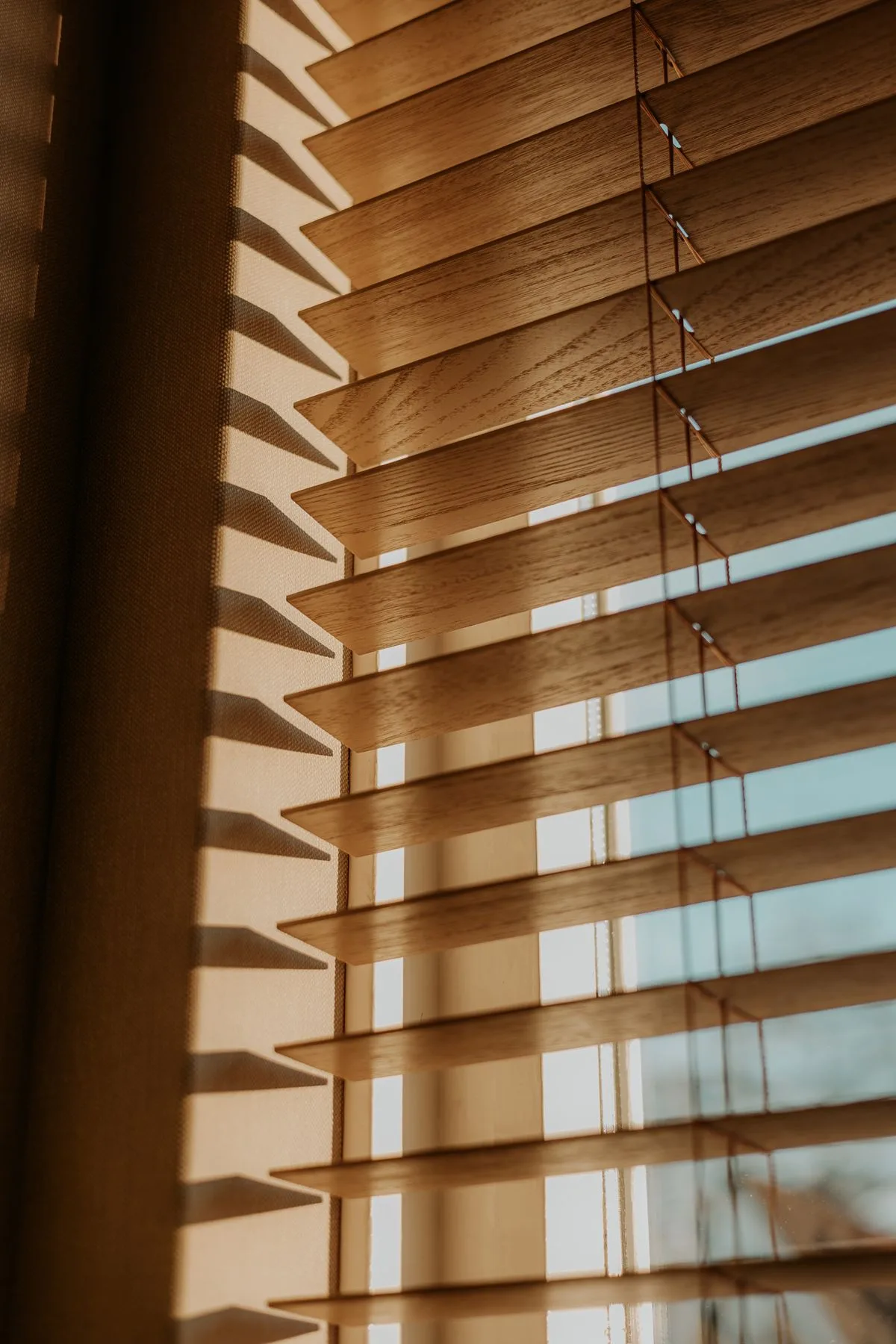
Why Windows Lose Most of Their Heat After Sunset
During a sunny winter afternoon, a south- or west-facing window can actually be a net heat source, bringing in more solar warmth than it loses by conduction. The moment the sun sets, that equation flips sharply. Outdoor temperatures plunge, solar gain drops to zero, and the window stays cold for 12 to 15 hours straight. Because even modern double-glazed windows insulate roughly five to eight times worse than an insulated wall, glass becomes the primary overnight drain on your heating system.
Insulating window coverings—specifically cellular (honeycomb) shades and lined thermal curtains—target that exact nighttime window penalty. Unlike permanent glazing upgrades, they let you harvest free daytime sunlight when open and deploy a flexible insulating barrier at dusk. Yet lab tests and field studies show huge performance gaps between a poorly hung decorative drape and a tightly fitted cellular shade with side channels.
The Chimney Effect: Why Fit Matters More Than Fabric Thickness
Many homeowners buy heavy velvet or foam-backed drapes, hang them on a standard rod three inches out from the wall, and wonder why the floor still feels icy. The culprit is natural convection—often called the chimney effect.
Here is what happens behind an unsealed curtain: warm room air slips over the open top of the curtain rod, touches the cold window glass, cools down rapidly, becomes denser, and plunges out the bottom of the curtain onto your ankles. That continuous air loop pumps room heat straight onto the glass all night long, erasing much of the fabric's insulating value.
Stopping the chimney effect requires trapping a stagnant layer of air against the glass. You can do that in three ways:
- Inside-mount cellular shades: Honeycomb pockets trap still air inside the shade itself, while a snug 3–5 mm clearance inside the window jamb restricts airflow around the edges.
- Side-track / U-channel cellular shades: Adding slim aluminum or PVC side tracks along the jamb edges eliminates perimeter convection almost completely, turning a good shade into a genuine thermal barrier.
- Pelmet-sealed thermal curtains: Mounting curtains close to the wall beneath a closed top pelmet (valance box) and letting the hem kiss the sill or floor blocks the top-to-bottom convection loop.
| Window Covering Type | Typical Added Thermal Resistance (US R-Value) | Combined Window U-Factor Drop (Over U-0.50 Legacy Double) | Combined Metric Uw Drop (Over Uw 2.8 W/m²·K) | Typical Installed Cost per 15 ft² (1.4 m²) Window |
|---|---|---|---|---|
| Standard Unlined Fabric Drape (Open Top) | R-0.3 to R-0.6 | 0.50 → ~0.41 | 2.8 → ~2.3 W/m²·K | $60 – $120 / £50 – £100 / €55 – €110 |
| Lined Thermal Curtain + Top Pelmet / Magnetic Sides | R-1.2 to R-1.8 | 0.50 → ~0.29 | 2.8 → ~1.65 W/m²·K | $140 – $260 / £110 – £210 / €125 – €240 |
| Single-Cell Honeycomb Shade (Inside Mount) | R-1.5 to R-2.2 | 0.50 → ~0.26 | 2.8 → ~1.48 W/m²·K | $110 – $200 / £90 – £170 / €100 – €190 |
| Double-Cell Honeycomb Shade + Side Channels | R-2.8 to R-4.0 | 0.50 → ~0.18 – 0.21 | 2.8 → ~1.05 – 1.20 W/m²·K | $180 – $340 / £150 – £280 / €170 – €320 |
Worked Numerical Walkthroughs: US, UK, and EU Nighttime Savings
Because window coverings are typically closed only at night (roughly 13 to 14 hours per day during winter, or ~55% of heating hours), calculations must reflect overnight operating hours rather than assuming 24/7 closure. Let us test real numbers across three homes.
1. United States Example: Chicago, Illinois (180 ft² Older Double-Pane Windows, Gas Heat)
A Chicago home (6,300 HDD65) has 12 older clear double-pane windows (U = 0.48, R-2.08) totaling 180 ft². Heating comes from a 90% AFUE gas furnace at $1.30/therm ($1.44/therm delivered). Suppose 60% of the home's heating degree-hours occur overnight when shades are closed.
- Baseline Nighttime Window Loss: 0.48 × 180 × (6,300 × 0.60) × 24 = 7,838,208 Btu/yr (78.4 therms ≈ $113/yr during closed-shade hours).
- With Double-Cell Honeycomb Shades (adds R-2.5 effective, bringing nighttime assembly to R-4.58 or U = 0.218): Nighttime loss drops to 0.218 × 180 × 3,780 × 24 = 3,559,853 Btu/yr (35.6 therms ≈ $51/yr).
Annual heating savings are roughly $62/year. If DIY double-cell shades cost $1,500 for 12 windows, simple payback on heating alone is ~24 years—unless the home also uses electric heat or benefits in summer. In Chicago's humid July and August afternoons, closing cellular shades on west-facing glass cuts solar heat gain by 50% to 60%, often adding another $40–$65/year in air-conditioning savings and dropping combined payback to 12 to 14 years.
2. United Kingdom Example: Manchester Victorian Terrace (16 m² Single Glazing, Gas Boiler)
In Manchester (2,150 metric HDD), a terrace house has 16 m² of single-glazed timber windows (Uw = 4.8 W/m²·K, R-metric 0.208 m²·K/W). Gas costs £0.065/kWh in an 88% efficient boiler (£0.074/kWh delivered). Assume 60% of heating demand occurs during dusk-to-dawn curtain closure.
- Baseline Nighttime Loss: (4.8 × 16 × [2,150 × 0.60] × 24) / 1,000 = 2,378 kWh/yr (£176/yr).
- Heavy Lined Thermal Curtains with Pelmet (adds 0.28 m²·K/W, bringing nighttime Uw to ~2.05 W/m²·K): Nighttime loss = (2.05 × 16 × 1,290 × 24) / 1,000 = 1,016 kWh/yr (£75/yr).
Annual savings come to £101/year. On an outlay of £950 for thermal curtains and pelmets across the house, simple payback is 9.4 years—and on single-glazed windows, the immediate boost in evening living-room warmth is dramatic.
3. European Union Example: Vienna, Austria (20 m² Older Double Glazing, Electric Heat Pump)
In Vienna (3,000 metric HDD), a homeowner with 20 m² of 1990s double glazing (Uw = 2.7 W/m²·K) heats with an air-source heat pump (SCOP 3.0) at €0.28/kWh electricity (€0.093/kWh delivered heat).
- Baseline Nighttime Loss (60% overnight weight): (2.7 × 20 × 1,800 × 24) / 1,000 = 2,333 kWh/yr (€217/yr).
- Side-Track Cellular Blinds (nighttime Uw drops to ~1.25 W/m²·K): Nighttime loss = (1.25 × 20 × 1,800 × 24) / 1,000 = 1,080 kWh/yr (€100/yr).
Saving €117/year on a €1,400 installation yields a 12.0-year payback—plus cooler August afternoons when blinds block peak sun.
Summer Solar Rejection: The Second Half of the Payback
Unlike permanent winter window films, cellular shades and reflective-backed thermal curtains deliver substantial summer cooling relief without darkening your rooms in December. Light-colored or foil-lined honeycomb shades closed on sunny summer afternoons reflect solar radiation right back out through the glass before it can warm furniture and drywall. According to U.S. Department of Energy testing, tightly fitted cellular shades can reduce unwanted summer solar heat gain through windows by up to 60%—making them especially valuable on west-facing bedrooms that overheat between 4:00 PM and 8:00 PM.
The Condensation Trap: What Happens Behind Sealed Shades
There is one major moisture caveat with high-R window coverings. Because cellular shades and tight curtains block warm room air from reaching the glass, the interior glass surface becomes colder at night than when uncovered. Meanwhile, any tiny gap around the shade lets humid bedroom air seep behind it, hit that freezing glass, and condense into water—or even ice on single-pane windows.
To prevent moldy sills and peeling paint:
- Open shades every morning: Morning airflow and sunlight evaporate overnight condensation quickly.
- Leave a 10–15 mm bottom breathe gap in ultra-humid rooms: In bathrooms or bedrooms with single glazing, slightly cracking the bottom of the shade prevents stagnant moisture buildup.
- Keep indoor relative humidity between 35% and 45% in winter: Use kitchen and bath exhaust fans consistently.
Radiator Placement and Cord Safety
In UK and European homes, radiators are frequently mounted directly beneath windows. Hanging floor-length thermal curtains over a radiator traps all the radiator's heat behind the curtain and sends it straight out the glass. Always hem curtains just above the windowsill or tuck them behind the sill lip so radiator heat rises freely into the room.
In bedrooms and family rooms, also check child-safety and egress standards. Choose cordless or motorized cellular shades (now mandatory or standard under US ANSI/WCMA and EU EN 13120 child-safety rules) to eliminate strangulation hazards from dangling pull cords, and avoid heavy, complex curtain hardware that could snag or slow an emergency window exit.
Buying & Installation Checklist
- Look for AERC certification (US) or BBSA thermal data (UK/EU): Compare independent lab-tested winter heat-loss and summer solar-gain scores rather than vague 'energy-saving' packaging claims.
- Prioritize double-cell over single-cell for cold climates: Double-cell honeycomb fabric adds a second row of trapped air pockets for only a modest price bump.
- Seal the top and sides: Use a closed cornice/pelmet above curtains or side tracks on cellular shades to defeat the chimney effect.
- Automate dusk/dawn timing if possible: Simple motorized schedules or smart reminders ensure shades actually close at sunset and open on sunny winter mornings—human forgetfulness is the biggest driver of lost savings.
- Keep radiators unblocked: Never drape thermal curtains down in front of an active radiator or baseboard heater.
Important Performance and Safety Notice
Nighttime heat-loss calculations above are illustrative models assuming 60% overnight heating-degree weighting and consistent daily operation; actual utility savings are never guaranteed and depend on climate, window condition, opening/closing habits, and heating-system efficiency. Always specify cordless or tensioned child-safe operating mechanisms, keep flammable draperies well clear of space heaters or hot radiators, and ensure window coverings do not obstruct emergency bedroom egress.