
How Much Home Battery Storage Do You Actually Need?
Sizing a residential battery bank starts with separating your essential outage circuits from discretionary loads rather than matching your entire monthly utility bill. Use this load-budgeting framework to compare usable kilowatt-hours, inverter surge limits, and solar recharge windows across US, UK, and EU electrical systems.
Updated 2026-11-20 · 1546 words
Why Sizing by Your Monthly Utility Bill Fails
Most homeowners begin shopping for residential energy storage by dividing their monthly electricity bill by 30 days. On paper, a household consuming 900 kWh per month averages 30 kWh per day, which tempts buyers into pricing massive 30 kWh to 40 kWh battery stacks. In practice, that approach almost always leads to overspending because daily grid consumption includes high-draw convenience appliances—electric clothes dryers, oven broilers, EV chargers, and central air conditioning—that you rarely need to run simultaneously during a grid outage or peak-tariff window.
Effective battery sizing separates two distinct goals: overnight self-consumption (storing daytime rooftop solar or cheap off-peak grid power for evening use) and resilience backup (keeping refrigeration, lighting, internet routers, medical devices, and heating controls alive when the utility lines go dark). A home that needs 10 kWh to bridge the evening peak between 4:00 PM and 10:00 PM might only need 6 kWh per night for critical outage survival if the occupants shed heavy thermal loads, or 25 kWh if they insist on running a heat pump through a freezing night.
Step 1: Separate Continuous Wattage from Surge Inrush
Every battery specification sheet lists two numbers that govern real-world performance: energy capacity in kilowatt-hours (kWh) and power output in kilowatts (kW). Think of kWh as the volume of fuel in the tank and kW as the width of the fuel line. A 13.5 kWh battery paired with a 5 kW continuous inverter can supply 500 watts for roughly 24 hours (accounting for conversion losses), yet it will trip its overload protection in milliseconds if you try to start a 6 kW central air compressor alongside a microwave.
Motorized appliances—refrigerators, well pumps, sump pumps, and HVAC blowers—draw a brief locked-rotor amperage (LRA) surge lasting 0.5 to 2 seconds upon startup. That spike frequently reaches three to five times the appliance's running wattage. When auditing your home, record both the running watts and the startup surge for every circuit you intend to back up.
- Refrigerator and freezer: 120 W to 220 W running, 800 W to 1,200 W startup surge, cycling roughly 35% of the hour (about 1.5 kWh to 2.2 kWh per 24 hours).
- Wi-Fi router, ONT fiber modem, and laptops: 45 W to 110 W continuous with negligible surge (1.1 kWh to 2.6 kWh per 24 hours).
- LED lighting across 6 rooms: 60 W to 120 W active during evening hours (0.4 kWh to 0.8 kWh per day).
- Gas furnace blower or hydronic boiler circulator pump: 300 W to 650 W running, 1,000 W to 1,600 W surge depending on motor age.
- Submersible well pump (US rural homes): 750 W to 1,500 W running, 2,500 W to 4,000 W surge on 240V split-phase circuits.
- Electric kettle or induction hob (UK/EU kitchens): 2,200 W to 3,000 W running on a 230V ring or radial circuit, zero surge, short duty cycle.
Step 2: Account for Usable Capacity and Reserve Buffers
A battery marketed as "10 kWh" rarely delivers 10 kWh to your wall outlets. Lithium-ion packs enforce a Depth of Discharge (DoD) ceiling—typically 90% to 100% for modern Lithium Iron Phosphate (LFP) units and 85% to 90% for Nickel Manganese Cobalt (NMC) units—to prevent premature cell degradation. Furthermore, if you configure your system for daily time-of-use shifting, you will likely lock a 15% to 20% backup reserve in the software so the battery never drains completely before an unexpected storm.
Finally, every watt-hour passing through an inverter incurs conversion losses. A 10 kWh nominal pack with 90% DoD, a 20% storm reserve, and 90% discharge efficiency yields:
10 kWh × 0.90 (DoD) × 0.80 (available above reserve) × 0.90 (inverter efficiency) = 6.48 kWh of actual AC electricity at your breaker panel for daily cycling, or 8.10 kWh if you drain the reserve during an emergency.
Regional Worked Examples: US, UK, and EU Households
Voltage architecture, heating fuels, and tariff structures change the optimal battery footprint dramatically across regions. Below are three realistic load-budget walkthroughs.
United States: 120V/240V Split-Phase Suburban Home ($0.18–$0.42/kWh)
Consider a 2,200 sq ft home in Texas or California using a 120V/240V split-phase 200A main panel. During a summer grid failure, the homeowner wants to back up a refrigerator (1.8 kWh/day), internet and home office gear (2.0 kWh/day), LED lights and ceiling fans (1.5 kWh/day), a garage door opener (0.2 kWh/day), and a 240V variable-speed heat pump running in eco-dehumidify mode for 6 hours overnight (1.8 kW × 6 h = 10.8 kWh). Total daily critical energy equals 16.3 kWh.
Dividing 16.3 kWh by 0.90 inverter efficiency requires 18.1 kWh of usable DC storage. A single 13.5 kWh battery leaves the homeowner short by morning unless they drop the heat pump, whereas two 10 kWh modular units (20 kWh total, ~18 kWh usable) comfortably cover 24 hours without sun. At a typical installed US cost of $11,500 to $15,000 before incentives for a 13.5 kWh system—or $18,000 to $24,000 for 20 kWh—the second module is justified primarily by outage tolerance rather than bill savings alone.
United Kingdom: 230V Single-Phase Semi-Detached Home (£0.24–£0.30/kWh)
In the UK, most homes run on a 230V single-phase 100A supply with gas central heating and an electric shower (which is never placed on battery backup because it pulls 8.5 kW to 10.5 kW). A typical household consumes 8.5 kWh to 10.5 kWh per day overall, with 5.5 kWh occurring between 4:00 PM and midnight. Because UK grid reliability is high, buyers usually size batteries for tariff arbitrage—charging at £0.07/kWh overnight on an EV or smart off-peak tariff and discharging during £0.26/kWh daytime hours.
A 9.5 kWh to 10.2 kWh LFP battery paired with a 3.68 kW or 5 kW hybrid inverter (subject to DNO G98/G99 export notification rules) covers 100% of evening demand and leaves a 1.5 kWh buffer. Note that running a 3 kW UK kettle alongside a 2 kW oven on a 3.68 kW inverter will pull the remaining 1.32 kW from the grid—which is normal and cost-effective as long as the inverter is not in off-grid islanding mode.
European Union: 230V/400V Three-Phase Home (€0.30–€0.42/kWh)
Continental European homes in Germany, the Netherlands, or Spain frequently feature 400V three-phase service feeding induction cooktops, heat pumps, and wallbox EV chargers. A three-phase 10 kW hybrid inverter paired with a 12 kWh to 15 kWh modular LFP stack balances loads across L1, L2, and L3 phases. Suppose a Munich household uses 14 kWh/day, of which 6.5 kWh occurs while the family is awake after sunset and 2.5 kWh runs overnight standby loads (heat pump circulation, ventilation recovery, and fridge). That 9.0 kWh non-solar window fits neatly inside a 12 kWh battery at 85% usable DoD (10.2 kWh usable), saving roughly €0.35/kWh on displaced grid imports when paired with rooftop PV.
| Sizing Tier | Usable Capacity | Typical Inverter Power | What It Powers in an Outage | Best-Fit Profile |
|---|---|---|---|---|
| Essential Backup | 5 kWh – 7 kWh | 3.0 kW – 3.68 kW | Fridge, Wi-Fi, LED lights, gas boiler controls, phone/laptop charging for 18–24 hours | UK/EU flats, low-consumption homes, budget overnight solar shifting |
| Standard Whole-Evening | 10 kWh – 15 kWh | 5.0 kW – 7.6 kW | All essentials plus microwave, TV, home office, intermittent well pump or small split AC | Most US/UK/EU 3-bedroom homes with 4 kW–8 kW solar arrays |
| Heavy Resilience / Heat Pump | 20 kWh – 30 kWh | 10 kW – 15 kW | Critical panel plus central HVAC / air-source heat pump, electric cooking, multi-day autonomy | Rural US homes, frequent multi-day storm zones, all-electric EU homes |
| Whole-Home Unconstrained | 40 kWh+ | 15 kW – 24 kW+ | Near-normal living including electric dryers, ovens, and limited EV top-ups | Off-grid estates or luxury resilience builds; rarely cost-effective on grid |
Step 3: Check Your Solar Recharge Window
Buying a 25 kWh battery when you only have a 4 kW rooftop solar array creates a mismatch during winter. In December across northern US states, the UK, or Germany, a 4 kW array may generate only 3 kWh to 5 kWh on an overcast day. After daytime household loads consume 3 kWh, only 1 kWh to 2 kWh remains to recharge the battery. Unless you also charge from cheap off-peak grid tariffs, that oversized battery will sit near its minimum reserve for weeks.
As a practical rule of thumb, pair each 1 kW of solar DC capacity with 1.5 kWh to 2.5 kWh of usable battery storage if solar is your primary charging source. A 6 kW PV system matches well with a 10 kWh to 15 kWh battery; an 8 kW PV system comfortably feeds a 13.5 kWh to 20 kWh bank across spring, summer, and autumn.
Pre-Purchase Sizing Checklist
- Download 12 months of hourly or 15-minute interval smart-meter data from your utility portal to pinpoint your actual dusk-to-dawn kWh usage.
- List every circuit you want powered during a grid outage and confirm whether any 240V (US) or three-phase (EU) loads require a sub-panel or automatic transfer switch.
- Verify inverter continuous kW and 2-second surge ratings against your single largest motorized appliance.
- Check whether your local utility offers net metering or low export rates; low export credits favor larger batteries for self-consumption, while 1:1 net metering reduces the financial return of storage.
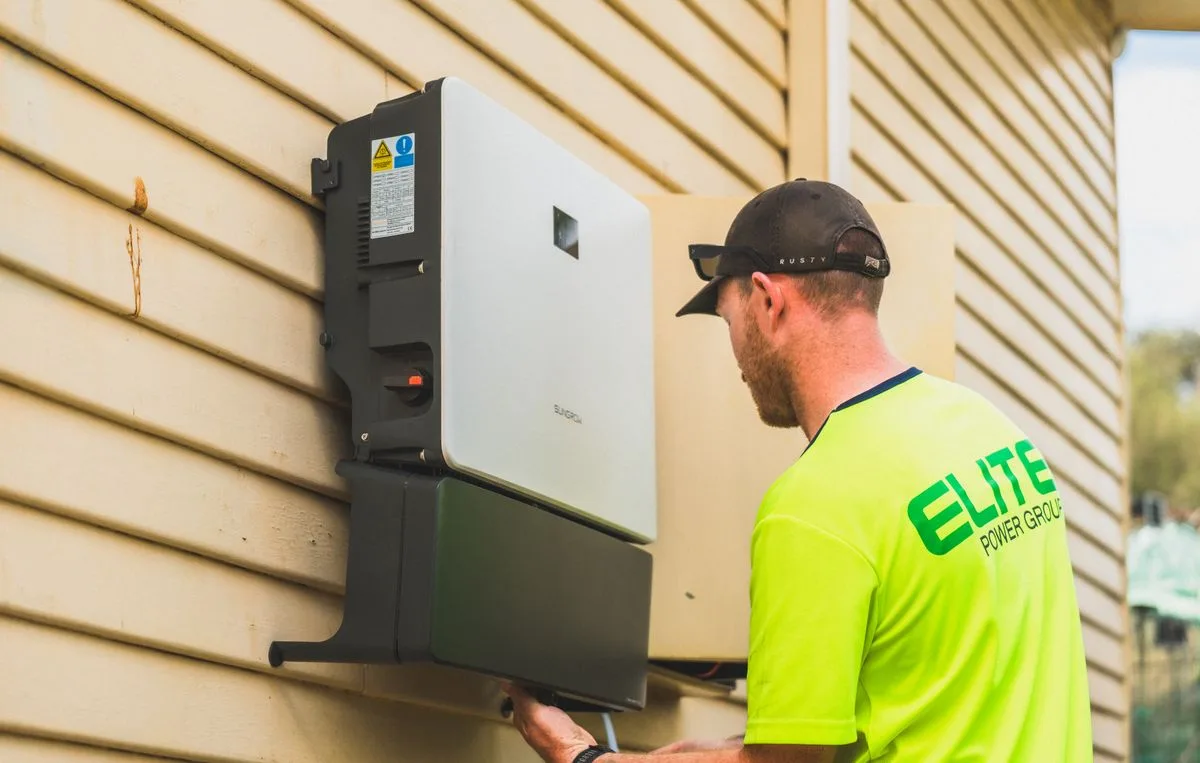
- Measure wall or floor space in your garage, utility room, or exterior wall for thermal clearance requirements before selecting a stackable or wall-mounted enclosure.
Safety, Installation, and Financial Disclaimers
All residential battery installations involve high-voltage DC busbars, fault-current hazards, and strict thermal management rules. Maintain manufacturer-specified clearances (commonly 150 mm to 300 mm on sides and 900 mm in front for service access) and adhere to local fire codes such as NFPA 855 in the United States, PAS 63100 in the UK, or VDE-AR-E 2510-50 in Germany. Never install lithium batteries in unventilated bedrooms, escape corridors, or locations exposed to standing water or extreme temperatures outside the datasheet operating window.
Integrating a battery with your main service panel, critical-load sub-panel, or automatic transfer switch (ATS) must be performed by a licensed, certified electrician in compliance with national wiring regulations (NEC Article 706, BS 7671, or IEC 60364) and utility interconnection rules. Utility bill savings and payback periods vary widely with tariff changes, weather, shading, and household habits, and are never guaranteed.